


Noticing a parent or loved one becoming unsteady can be concerning, especially when it seems to come on suddenly. Dizziness is one of those symptoms that can feel vague at first, but over time, it often raises bigger questions about safety, balance, and overall health.
In many cases, dizziness has a clear and manageable cause. Changes in balance, medication side effects, blood pressure shifts, and hydration all play a role. Understanding what’s behind it can help you respond with more confidence—and know when it’s time to take the next step.
Key Takeaways
- Dizziness in seniors is often caused by inner ear changes, medication side effects, blood pressure shifts, or dehydration
- Inner ear changes can affect balance and lead to sensations like spinning or disorientation
- Certain medications, especially for blood pressure or sleep, may contribute to dizziness
- Sudden drops in blood pressure when standing can cause brief but noticeable lightheadedness
- Dehydration and low blood sugar can impact stability and are often overlooked
- Persistent, worsening, or injury-related dizziness should be evaluated by a healthcare provider
Common Reasons for Dizziness
Dizziness rarely comes out of nowhere. In most cases, it connects to everyday changes in the body that affect balance, circulation, or energy levels.
Inner Ear and Balance
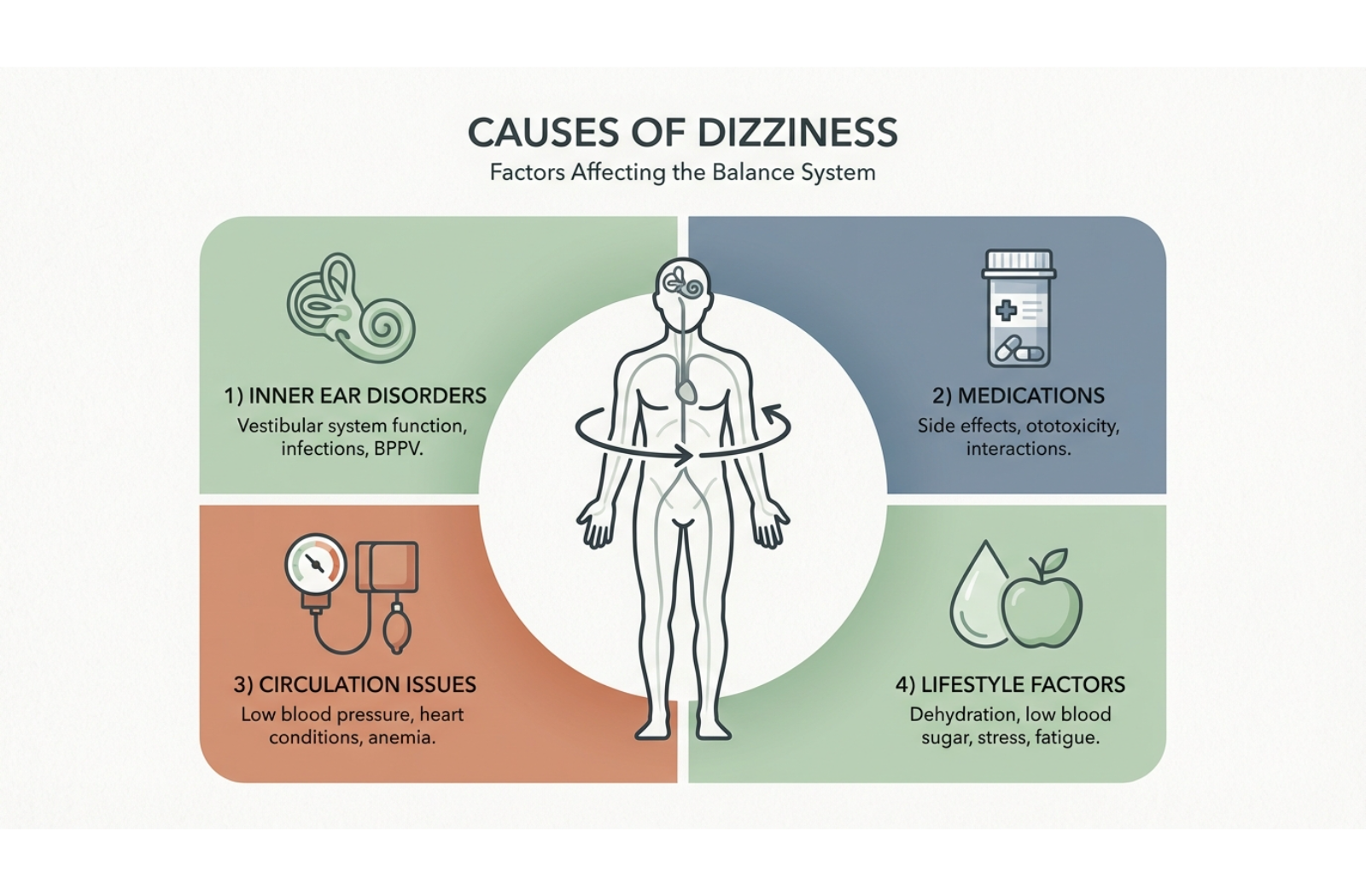
The inner ear plays a central role in how the body maintains balance. As people age, small changes in this system can make it harder to stay steady, especially when turning quickly or changing positions. This type of dizziness often feels like spinning or a loss of orientation rather than simple lightheadedness.
Medication Side Effects
Many commonly prescribed medications list dizziness as a potential side effect. This is especially true for medications related to blood pressure, sleep, or pain management. If a new prescription has been introduced—or a dosage has changed—dizziness may not be coincidental.
Blood Pressure and Circulation
A sudden drop in blood pressure can cause brief dizziness, especially when standing up too quickly. This is sometimes referred to as positional or orthostatic dizziness. It may only last a few seconds, but those moments can still be enough to cause instability. Regular movement, slow transitions from sitting to standing, and consistent monitoring can help reduce these episodes.
Dehydration and Nutrition
Not drinking enough water or missing meals can have a noticeable impact on how the body functions. When hydration levels drop or blood sugar dips too low, dizziness can follow. These cases are often overlooked because they seem minor, but they can build over time.
Is Dizziness Normal as You Age?
Dizziness becomes more common with age, but that doesn’t mean it should be dismissed. Occasional lightheadedness may not signal a serious issue, especially if it’s brief and tied to something specific like standing up too quickly.
However, patterns matter. If dizziness happens more often, lasts longer, or begins to interfere with daily routines, it’s worth paying closer attention. Even subtle changes can point to something that needs to be addressed.
When to Consult a Healthcare Professional
Knowing when to seek help can make a significant difference. While some dizziness is situational, certain signs suggest it’s time for a closer look.
New or Worsening Symptoms
If dizziness becomes more frequent, more intense, or starts to feel different than before, it shouldn’t be ignored. Pay attention to how often it happens and whether it’s becoming harder to recover from.
Other symptoms—like blurred vision, headaches, weakness, or confusion—can add important context. When these appear alongside dizziness, it’s best to involve a healthcare provider sooner rather than later.
After a Fall or Injury
Dizziness following a fall or head injury deserves immediate attention. Even if it seems mild at first, it may indicate an underlying issue that wasn’t obvious right away. Addressing it early helps reduce the risk of further complications and supports a safer recovery.
How Assisted Living Can Support Stability and Independence
When dizziness becomes more than an occasional concern, daily routines can start to feel less predictable. Having the right level of support in place can make those moments easier to manage.
In an assisted living setting, support is built around each person’s needs. Whether it’s help with daily movement, medication oversight, or simply having someone nearby to respond quickly, small layers of support can go a long way.
Just as important, that support doesn’t replace independence—it helps protect it. With a safer environment and consistent routines, many people are able to stay more confident in their day-to-day lives.
A Proactive Approach to Well-Being
Dizziness is often the body’s way of signaling that something needs attention. Whether the cause is simple or more complex, recognizing patterns and responding early can help prevent larger concerns down the line.
At Inspired Living at Alpharetta, support is designed to meet people where they are. We believe in taking a one-on-one approach to care because we know the value of that personal touch. If you’re looking for a life for your loved one full of guidance, consistency, and love, look no further. Schedule a tour with us today to learn more.