


Key Takeaways
- Caregiver burnout develops over time and is related to the chronic stress of your caregiving responsibilities and environment. It often involves feeling overworked and unsupported.
- Compassion fatigue can appear more suddenly and stems from the emotional weight of witnessing a loved one’s distress. It is directly tied to your empathetic connection.
- While the signs can overlap, burnout is about your tasks, and compassion fatigue is about your emotional relationship with the person you support.
- You can address both conditions by setting boundaries, connecting with a support system, and exploring professional care options like respite care.
Understand the Stress of Caregiving
When you take on the role of a caregiver, you pour so much of your energy and heart into helping someone you care about. It’s a role filled with purpose, but communities like Inspired Living at Alpharetta understand it can also be demanding. Over time, the physical and emotional weight can start to feel heavy, leading to exhaustion and other signs of caregiver strain. You might feel like you’re running on empty and find it hard to sort out what you’re experiencing.
Many people use the terms burnout and compassion fatigue interchangeably, but they are different conditions with unique causes. While they can feel similar, burnout stems from the chronic stress of your workload and environment, while compassion fatigue arises from the emotional toll of connecting with someone’s distress. Knowing the difference can help you find the right path toward feeling more balanced and supported in your important role.
A Look at Caregiver Burnout
Burnout builds over time and is often the result of prolonged stress from your caregiving duties. When you feel constantly overwhelmed by your responsibilities with little time for yourself, you might start to experience it. Burnout is less about your emotional connection to your loved one and more about the demands of the role itself, which can leave you feeling depleted.
Common Signs You May Notice
Recognizing the signs of burnout is the first step to addressing it. The feelings often develop gradually, so pay attention to shifts in your mood and energy, which can be symptoms of caregiver stress. You might notice:
- A sense of emotional, mental, and physical exhaustion that rest does not seem to fix
- Feelings of detachment or cynicism related to your care duties and responsibilities
- A belief that your efforts don’t make a meaningful difference for your loved one
- Increased frustration or irritability over small things that didn’t used to bother you
The Causes Behind Burnout
Burnout is often rooted in your environment and happens when the demands placed on you exceed your resources to cope. Some common causes include:
- A consistently high workload with little practical or emotional support from others
- Unclear role expectations, where you’re not sure what is expected of you
- A lack of control over the situation or feeling that you have no say in decisions
- Losing a sense of personal identity outside of your caregiver role
How to Identify Compassion Fatigue
Compassion fatigue is different because it comes directly from the emotional toll of witnessing your loved one’s challenges. It can happen more suddenly than burnout and is tied to your empathetic relationship. Because you absorb the emotional pain of the person you care for, your empathy can become a source of your own distress.
What Compassion Fatigue Feels Like
The symptoms of compassion fatigue are personal and can affect your interactions with everyone. You may feel your well of empathy has run dry, making it harder to connect emotionally. Some signs include:
- A reduced ability to feel empathy for your loved ones or others
- Increased irritability, anger, or anxiety that seems out of character
- Physical symptoms like persistent headaches, digestive issues, or trouble with sleep
- Withdrawing from social connections and activities you once enjoyed
Why This Condition Develops
This condition develops from a deep emotional investment in your loved one. It isn’t a sign of weakness, but happens when you focus so much on another’s pain that you neglect your own emotional needs. The primary drivers include:
- A deep emotional investment in your loved one’s daily well-being and happiness
- Constant exposure to their physical, emotional, or cognitive challenges
- A natural tendency to absorb the stress and emotions of those you care for
- A lack of opportunity to process the difficult emotions and find answers to frequently asked questions
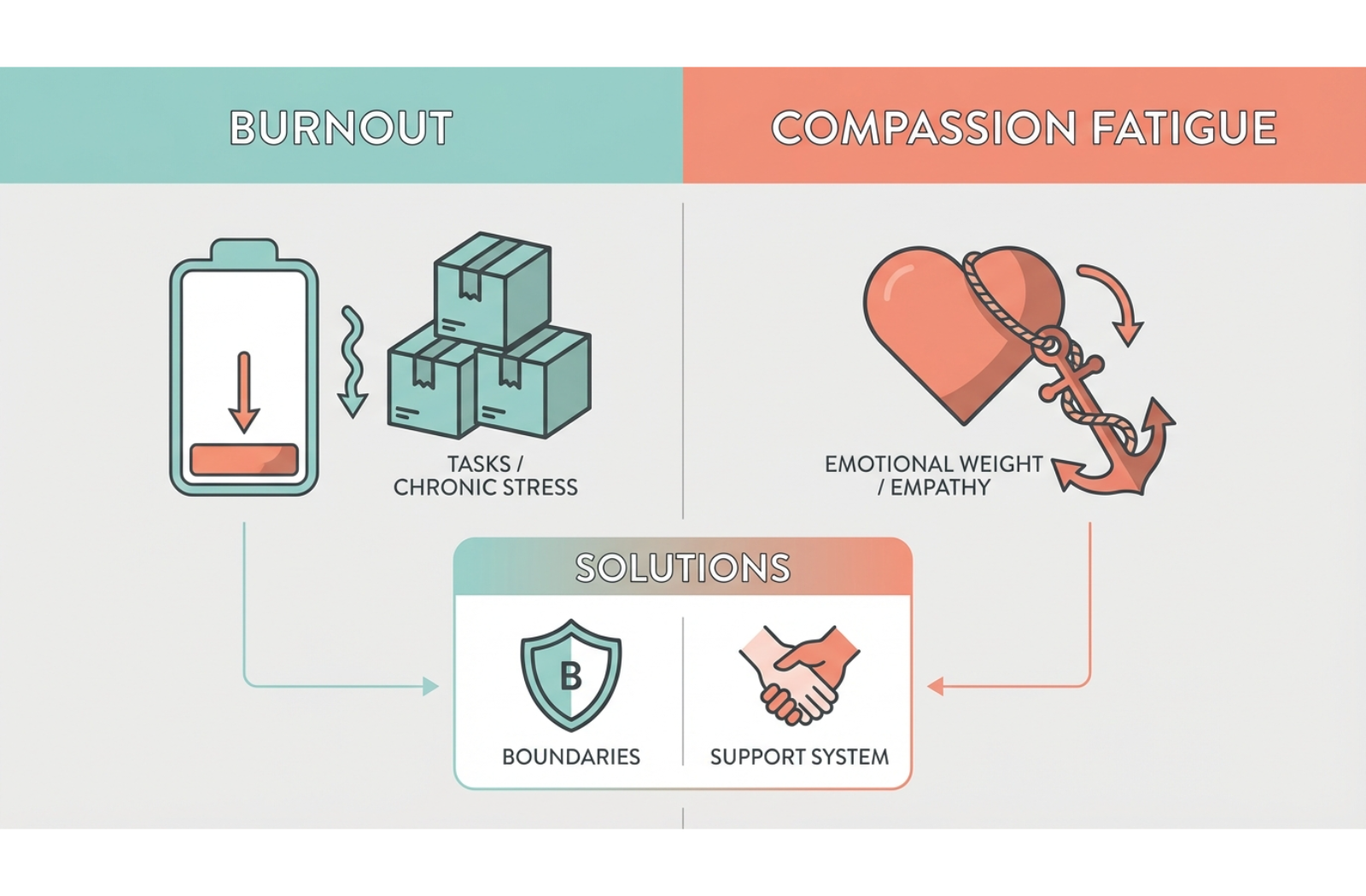
Key Distinctions Between the Two Conditions
While burnout and compassion fatigue can feel similar and even occur at the same time, their origins and effects are distinct. The main difference lies in what part of your caregiving role affects you the most—the physical and logistical workload or the deep emotional connection. Understanding this distinction is key to finding the most effective ways to support your own well-being.
The Role of Work and Environment
Burnout: This is often about the “what” and “how much” of your caregiving tasks. It’s connected to feeling overworked, under-supported, and overwhelmed by the sheer volume of responsibilities, including helping with activities of daily living.
Compassion Fatigue: This is more about the “who” and “why” of your role. It stems directly from your empathetic relationship with your loved one and the emotional weight of their situation.
The Emotional and Physical Impact
Burnout: You might feel you have nothing left to give and want to withdraw from your responsibilities. The feeling is one of depletion and a desire to escape the demands of the role.
Compassion Fatigue: You may feel numb or have a harder time connecting emotionally with anyone, not just the person you care for. Your capacity for empathy feels diminished across the board.
Find Support for Your Journey
Acknowledging your feelings is a powerful first step. Once you identify what you’re facing, you can find strategies to recharge and find balance. Options like professional respite care can provide a much-needed break. A short-term stay in an assisted living or memory care community gives your loved one professional support while you take time for yourself.
At Inspired Living at Alpharetta, the team understands the complexities of the caregiving journey. They are dedicated to creating a supportive environment that enriches residents’ lives through personalized care.
By exploring a senior living community, you can find a partner in care, allowing you to focus on your relationship with your loved one rather than just the tasks at hand. You don’t have to do this alone; support is available for both of you.